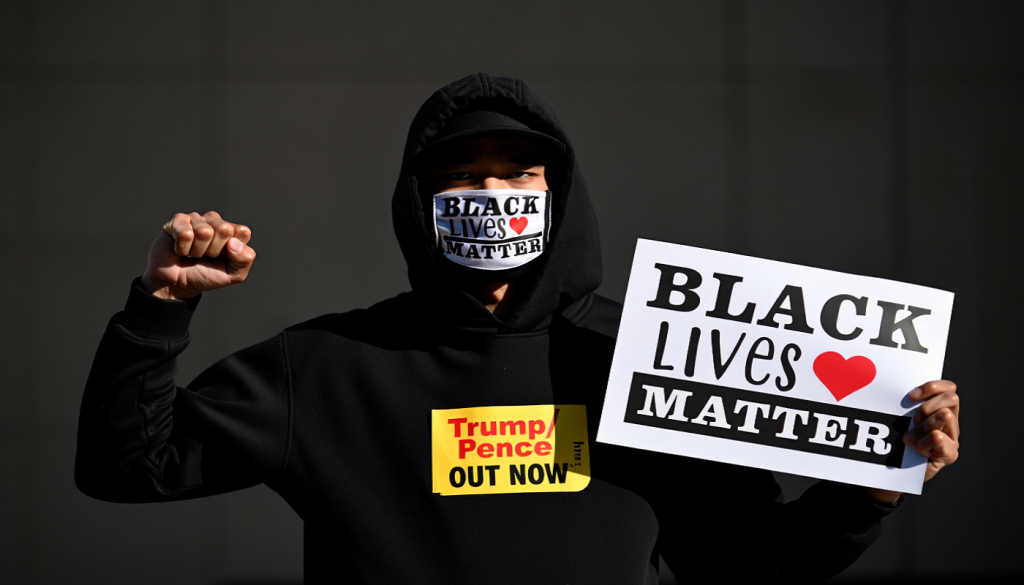
In the realm of activism, few movements have captured the global conscience as vividly and urgently as Black Lives Matter (BLM). Born out of a cry against systemic racism and police brutality, BLM has become not only a call to action but a visual and cultural symbol of resistance, empowerment, and solidarity. One of the most enduring and powerful expressions of this movement is the Black Lives Matter T-shirt — a simple yet potent garment that speaks volumes without uttering a word.
Origins of the Movement
To understand the significance of the BLM T-shirt, it is essential first to understand the origins of the movement itself. Black Lives Matter began in 2013 as a hashtag — #BlackLivesMatter — in response to the acquittal of George Zimmerman in the fatal shooting of Trayvon Martin, an unarmed Black teenager in Florida. Created by activists Alicia Garza, Patrisse Cullors, and Opal Tometi, the phrase quickly evolved from a social media campaign into a decentralized movement advocating for the rights and dignity of Black individuals worldwide.
Over the years, the movement gained momentum, particularly after the high-profile deaths of Michael Brown in Ferguson, Missouri, and Eric Garner in New York. But it was the tragic killing of George Floyd in Minneapolis in 2020 that catapulted BLM into a global spotlight. As millions took to the streets to demand justice, the phrase “Black Lives Matter” was not only shouted in protest but emblazoned on signs, murals, social media posts, and most notably, T-shirts.
The BLM T-Shirt: More Than Just Clothing
At first glance, a T-shirt may seem like a mundane piece of clothing, but within the context of protest and civil rights, it transforms into a powerful tool of messaging. Wearing a Black Lives Matter T-shirt is not merely about fashion; it is a political statement, a personal declaration, and a visual act of defiance against racism and oppression.
The BLM T-shirt has become a wearable manifesto. It conveys solidarity with the Black community and a refusal to accept injustice as the norm. In a world oversaturated with digital messages and fleeting hashtags, the physical presence of someone wearing a BLM shirt in a public space has a grounding and lasting impact. It compels viewers to acknowledge the message, to confront the reality it represents, and to engage — if only momentarily — with the deeper meaning behind the words.
The Evolution of Design
Black Lives Matter T-shirts come in a variety of styles, colors, and designs. While the most iconic version features stark white lettering on a black background, the range has expanded to include bold graphics, artistic renditions of victims of police brutality, and slogans such as “Say Their Names,” “No Justice, No Peace,” and “I Can’t Breathe.”
Artists and designers around the world have used BLM shirts as a canvas for creative expression and activism. Some feature raised fists, a longstanding symbol of Black power and resistance. Others incorporate Pan-African colors — red, black, and green — or reference African heritage and history. These variations reflect the diverse voices within the movement and the myriad ways individuals connect with its mission.
In addition to individual expression, many grassroots organizations, nonprofits, and even mainstream clothing brands have produced BLM T-shirts, often donating proceeds to social justice causes. This intersection of commerce and activism has sparked debate, raising important questions about commodification and authenticity, but it has also broadened the movement’s reach and visibility.
T-Shirts as Tools of Protest
Throughout history, apparel has played a key role in political movements. From the “Votes for Women” sashes of the suffragette movement to the anti-war T-shirts of the 1960s, what people wear can amplify their message and unify a cause. The BLM T-shirt follows in this tradition.
During the massive protests in 2020 and beyond, seas of demonstrators wearing matching shirts created a sense of cohesion and collective purpose. The shirts helped people find one another in crowds, solidify group identity, and strengthen morale. They also made protesters instantly recognizable to media, passersby, and law enforcement — a double-edged sword that demonstrated both strength in numbers and the risks involved in visible dissent.
Athletes, celebrities, students, and politicians have all donned Black Lives Matter shirts in various contexts — on basketball courts, at awards shows, in schools, and in legislative halls. These moments underscore the shirt’s power to transcend traditional boundaries of protest and infiltrate spaces where Black voices have historically been silenced or ignored.
Controversy and Backlash
As with most social justice movements, Black Lives Matter has faced criticism and backlash — and the T-shirts are no exception. Critics have accused BLM apparel of being divisive or anti-police, despite the movement’s stated aim to fight systemic injustice and promote equality. Some schools and workplaces have attempted to ban BLM clothing, sparking legal challenges and First Amendment debates.
In many of these cases, the controversy around the shirt highlights the very issues the movement seeks to address. When a simple statement of human dignity becomes “controversial,” it reveals deep-seated discomfort with the realities of racism and the demand for change. The pushback itself becomes part of the story, drawing attention to the persistence of inequality and the need for continued advocacy.
The Commercialization Debate
The mass production and sale of BLM T-shirts have generated significant profits for some brands — raising concerns about the commercialization of activism. Critics argue that when corporations co-opt political messages for marketing purposes, it risks diluting the message and prioritizing profit over principle.
However, others see commercial apparel as a gateway to awareness and participation. A well-designed shirt sold by a responsible brand can educate consumers, raise funds for related causes, and normalize public conversations about race and justice. The key lies in transparency and accountability — ensuring that the production, messaging, and profits align with the movement’s core values.
Global Reach and Cultural Impact
What began as a U.S.-centric movement has expanded into a global phenomenon. Protests have taken place in Canada, the UK, France, Germany, Brazil, Australia, South Africa, and beyond. In each country, local issues intersect with global themes of racial inequality, and the BLM shirt has become an international symbol of unity.
In London, protesters have worn BLM shirts while kneeling in front of Parliament. In Paris, demonstrators have marched past monuments to colonialism wearing BLM apparel. In Sydney and Melbourne, Aboriginal activists have donned the shirts to draw parallels between Black struggles in the U.S. and those of Indigenous Australians. This international solidarity highlights the interconnectedness of racial justice efforts and the universality of the message: Black Lives Matter — everywhere.
The BLM T-Shirt in Art and Education
Beyond protests and fashion, the BLM shirt has made its way into classrooms, art galleries, and museum exhibits. Educators use it as a teaching tool to spark discussions about civil rights, race relations, and freedom of expression. Artists use it as a medium to explore themes of identity, struggle, and empowerment.
Photographs of people wearing BLM shirts have been featured in photojournalism exhibits, academic texts, and digital archives. The shirt has become a historical artifact in its own right — a tangible reminder of a pivotal moment in the 21st-century struggle for justice.
A Living Symbol
The Black Lives Matter T-shirt is more than a trend. It is a living symbol — evolving, adapting, and continuing to speak long after the headlines fade. It embodies a collective memory of loss and resistance, but also of hope and determination. Every time someone puts on that shirt, they participate in an ongoing narrative of advocacy and awareness.
In a world often dominated by noise, distraction, and division, a simple black T-shirt with white letters reminds us of something essential and non-negotiable: that Black lives do matter. The power of that message — expressed through the quiet dignity of clothing — cannot be overstated.
Conclusion
From street protests to sports arenas, from classrooms to catwalks, the Black Lives Matter T-shirt has carved a unique space in both political activism and popular culture. It represents a cry for justice, a show of unity, and a demand for visibility in a world where Black lives have too often been marginalized or erased.
As long as the fight for racial equality continues — in America and across the globe — the BLM T-shirt will remain not just relevant but vital. It is not just a piece of fabric; it is a flag, a shield, a canvas, and a voice. And its message — powerful, urgent, and uncompromising — will continue to echo in streets, hearts, and history books for generations to come.